
By Mayuri Singh & Nishant Saxena
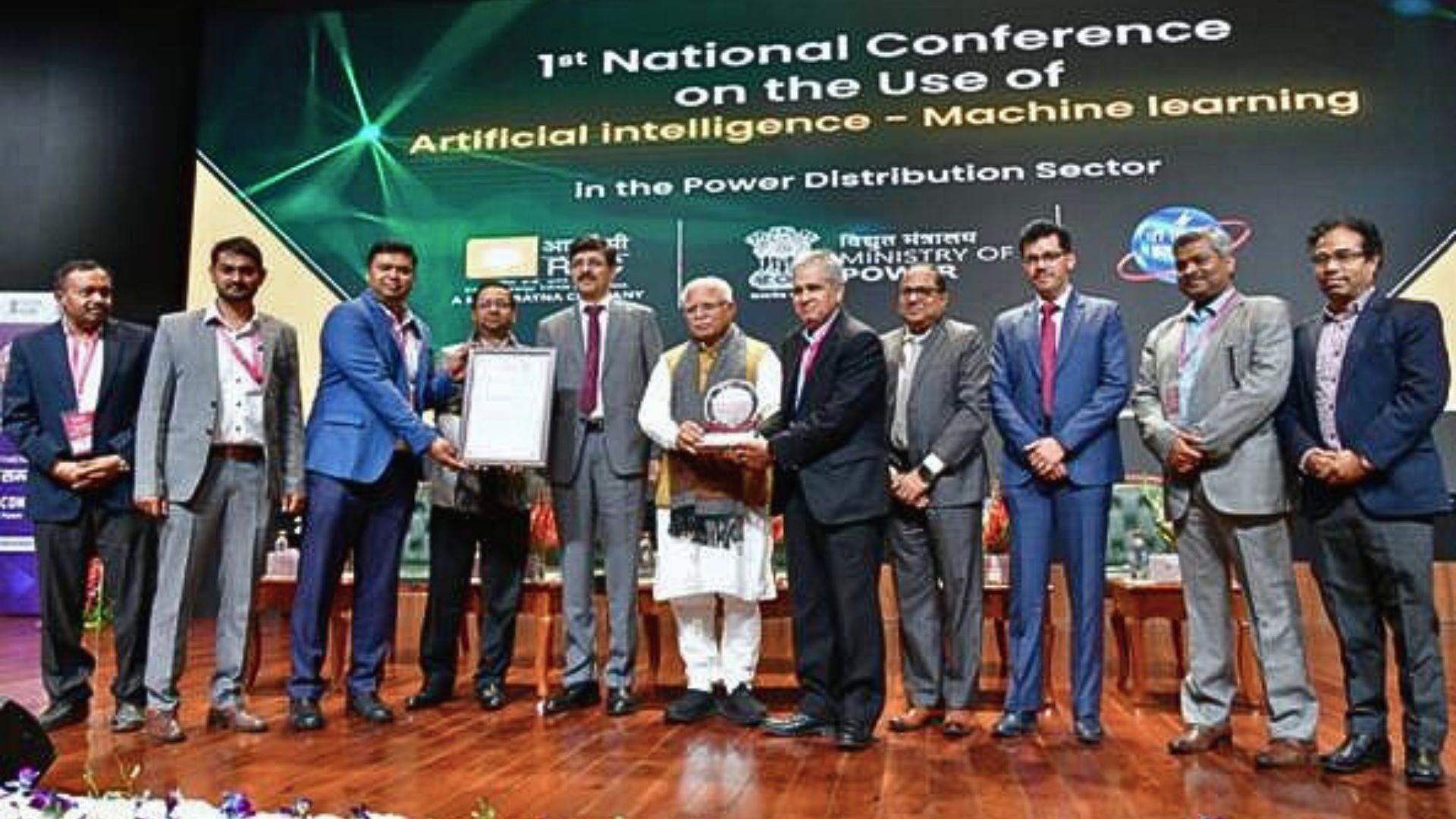
The recent National Conference on the use of Artificial Intelligence (AI) and Machine Learning (ML) technologies in the power distribution sector held at New Delhi offered a striking snapshot of how quickly digital intelligence is moving into the core of India’s electricity distribution system. Advanced meter analytics, theft-pattern detection, outage prediction models, behavioural demand response, transformer-loading intelligence, digital twins, and appliance-level consumption insights were no longer aspirational ideas; they were live demonstrations.
Yet as the presentations unfolded and conversations progressed at Bharat Mandapam, a deeper observation surfaced that the power sector’s technological capability is increasing much faster than its narrative capability.
India is building sophisticated AI-driven infrastructure, but public and institutional trust have not evolved at the same pace. Unless this gap is addressed intentionally, the most promising applications will struggle to scale beyond controlled pilots.
This is not merely our interpretation; it resonates with the Power Minister’s (Shri Manohar Lal) own warning at the conference that misinformation around new technologies can erode confidence, and utilities must win consumer support for successful adoption.
India’s Power Sector Is Entering an Algorithmic Phase, But the Public Narrative Is Still in Its Manual Phase
Across utilities, AI is already shaping operational decisions that once relied heavily on field teams and manual interpretation. Algorithms now anticipate feeder failures before they occur, compare consumption curves to detect theft patterns, refine demand forecasts in near-real time, flag abnormal transformer loading, and identify billing anomalies with greater accuracy than human review.
This shift is not visible to most consumers, and that invisibility is emerging as a risk.
AI may optimise system performance, but households, industries, and commercial users encounter its outcomes long before they understand the logic behind them. A revised bill, a remote disconnection triggered by abnormal usage, a message encouraging behavioural load shifting, or a field visit prompted by a digital alert often becomes the consumer’s first encounter with AI-driven decision-making.
When systems change without adequate explanation, resistance grows.
And resistance, not technology, becomes the limiting factor.
Smart Meters Were the First Warning: Technology Without Explanation Can Create Distrust
Smart meters were introduced to enhance transparency, improve billing accuracy, reduce losses, and strengthen DISCOM finances. Technically, they are delivering much of this promise.
However, early public reactions in several states revealed the consequences of introducing new technology without narrative preparation. Concerns about data privacy, billing anomalies, remote disconnection, and unclear grievance procedures overshadowed the benefits.
The challenge was the absence of a public vocabulary around the smart meter. Combined with isolated implementation issues, this communication gap contributed to pockets of distrust.
If this gap is not addressed now, the sector will face similar pushback with AI-based analytics, except on a much larger scale and with far more complex consumer expectations.
AI Introduces a New Decision-Maker in the Power System, One That Requires Legitimacy
As distribution networks become more intelligent, AI begins to influence decisions that carry real consequences:
- whether a consumer is flagged for potential theft
- how peak load is predicted and managed
- whether a feeder needs preventive maintenance
- where outages are anticipated
- how consumption behaviour is interpreted
- how bills are corrected or adjusted
In this environment, the question is no longer whether the model is technically correct, but whether it is institutionally legitimate.
Consumers want to know who stands behind an algorithm’s conclusions, how their data is used, and where accountability lies when AI decisions affect them directly.
These are not engineering questions. They are governance and communication questions.
And they will become central as AI scales across India’s distribution ecosystem.
The Grid Is Becoming Smarter, Faster, and More Data-Driven, But Communication Frameworks Have Not Kept Pace
Digitalisation has transformed the technical architecture of India’s power sector.
However, the communication architecture around it still resembles an earlier era, dominated by circulars, notices, and technical advisories.
AI-driven reforms require a different approach, one that is:
- proactive and transparent
- bilingual or multilingual
- behaviour-aware
- narrative-driven
- sensitive to concerns around data, privacy, and fairness
As AI begins to influence billing, theft enforcement, operational planning, and consumption behaviour, the sector must pivot from “explanation after the fact” to “communication before the impact.”
Citizen-facing clarity must accompany system-facing intelligence.
Bridging the Trust Gap: What the Sector Must Build Now
1. A Public Vocabulary for AI in Electricity
Clear, simple explanations of what AI does in billing, load management, outage prediction, and enforcement, communicated in ways consumers can understand and question.
2. A Data-Use and Privacy Charter for Every Utility
A transparent statement of what data is collected, how it is used, what rights consumers have, and what safeguards exist.
3. Communication Strategies Embedded Into Pilot Design
Any AI pilot, whether for outage prediction or behavioural demand response, must include a structured communication plan for affected communities, not just an engineering plan.
4. Grievance Mechanisms Designed for Digital Decisions
If algorithms trigger operational actions, grievance redress must be accessible, timely, and human-led.
5. Institution-Level Preparedness for AI Accountability
DISCOMs need the capability to explain and defend algorithmic decisions, especially when they influence consumer liabilities or regulatory compliance.
India Has Solved Harder Problems; This One Requires a Mindset Change
The country has expanded renewable energy capacity at unprecedented speed. It has electrified millions of households and stabilised an increasingly complex grid.
It is now integrating AI into the power sector at a pace comparable with, or even faster than, advanced economies in certain applications, especially smart metering and AI-enabled distribution pilots.
The next challenge is not technical. It is communicative.
AI can optimise systems, but only trust can secure adoption.
And trust emerges not from secrecy or opacity, but from clear, timely, and relatable communication.
The sector is entering a phase where explanations will be as important as engineering, and narrative clarity will determine the pace at which AI reforms are accepted, internalised, and scaled.
If the last decade belonged to technology-led reform, the next will belong to communication-enabled adoption. Because a smart grid is ultimately not defined by the intelligence of its algorithms, but by the confidence of the people who depend on it every day.
Also read: Shaping the Wind Story After COP 30, Why Our Narratives Now Matter as Much as Our Megawatts