
Every legal strategy creates two cases. One before the law, and another in the minds of stakeholders.
At first glance, that may seem like an odd way to describe legal practice. Lawyers are trained to analyse statutes, draft contracts, assess legal risk and construct arguments. Communication is often treated as a separate discipline, something that becomes relevant after a legal strategy has been decided.
But every legal decision shapes interpretation even before it produces a legal outcome.
A notice from a regulator is read, not only for its legal content, but for what it appears to reveal about an organisation’s intent. A settlement proposal is assessed not only for its terms, but for what it suggests about confidence, commercial priorities or appetite for risk. Even silence can acquire meaning. It may be interpreted as restraint, uncertainty, calculation or indifference, depending on the circumstances.
Law has always done more than allocate rights and obligations. It has always shaped how people understand one another.
Perhaps that is one of the constant truths about legal practice.
Every Legal Document Is Also an Interpretation
Imagine two companies responding to the same regulatory notice.
Both engage experienced counsel. Both submit legally robust responses supported by precedent and careful reasoning. But the months that follow look very different. One organisation rebuilds a constructive relationship with the regulator. The other finds itself facing greater scrutiny and more difficult engagement.
The legal arguments were comparable. The interpretations they created were not. This happens because legal documents are rarely read as technical instruments alone. Human beings instinctively search for meaning behind formal actions.
We infer motives from decisions, intentions from language, and confidence from conduct, often much before any adjudicating authority reaches a conclusion.
Behavioural scientists describe this tendency through concepts such as attribution theory. Faced with incomplete information, people naturally construct explanations for why others behave as they do. Legal documents, however carefully drafted, become part of that process. They are read as evidence of organisational judgement as much as legal reasoning.
Courts ultimately decide legal questions. People form impressions much earlier.
Legal Strategy Operates in Two Dimensions
Lawyers have traditionally been trained to ask a single question – Is this legally defensible?
It remains the right place to begin. It is no longer the only place to end.
Sophisticated legal practice increasingly requires a second question – How will this decision be understood by the people whose responses will influence what happens next?
That question extends well beyond public perception. Regulators decide how to engage in future proceedings. Commercial counterparties decide whether negotiations remain collaborative. Boards assess organisational resilience. Investors form views about governance. Employees interpret leadership under pressure.
Each audience encounters the same legal action. But each constructs its own narrative around it.
The legal consequences of a decision arise from the application of law. However, its strategic consequences arise from the interpretations it creates.
Recognising this does not transform lawyers into communicators. It recognises that legal judgement has always operated within human relationships, where meaning influences behaviour every bit as much as formal rights.
This Has Become Critical More Than Ever
For generations, legal decisions travelled within relatively contained professional networks. Contracts remained between parties. Regulatory correspondence stayed within organisations. Court proceedings attracted limited public attention outside matters of exceptional significance.
That landscape has changed.
Judgments, regulatory orders and consultation papers are widely accessible. Artificial intelligence allows complex legal documents to be summarised within minutes. Stakeholders who once relied entirely on legal advisers, increasingly encounter legal information directly.
The important shift is not simply that more people can access legal documents. It is that more people now interpret them.
Legal strategy, therefore, operates before a much larger audience than it once did. Organisations are evaluated not only by what they decide, but by what those decisions appear to say about their values, judgement and future conduct.
The law itself has not changed. The environment in which legal decisions acquire meaning has.
The Most Effective Lawyers Understand Both Cases
Experienced lawyers have always appreciated that legal advice influences more than legal outcomes.
A contractual clause can strengthen a commercial relationship or quietly weaken it. A regulatory response can preserve credibility or create unnecessary distance. Litigation can establish an important legal principle while simultaneously reshaping future negotiations between the parties.
These consequences rarely arise because the law has failed. They arise because legal decisions inevitably become social signals.
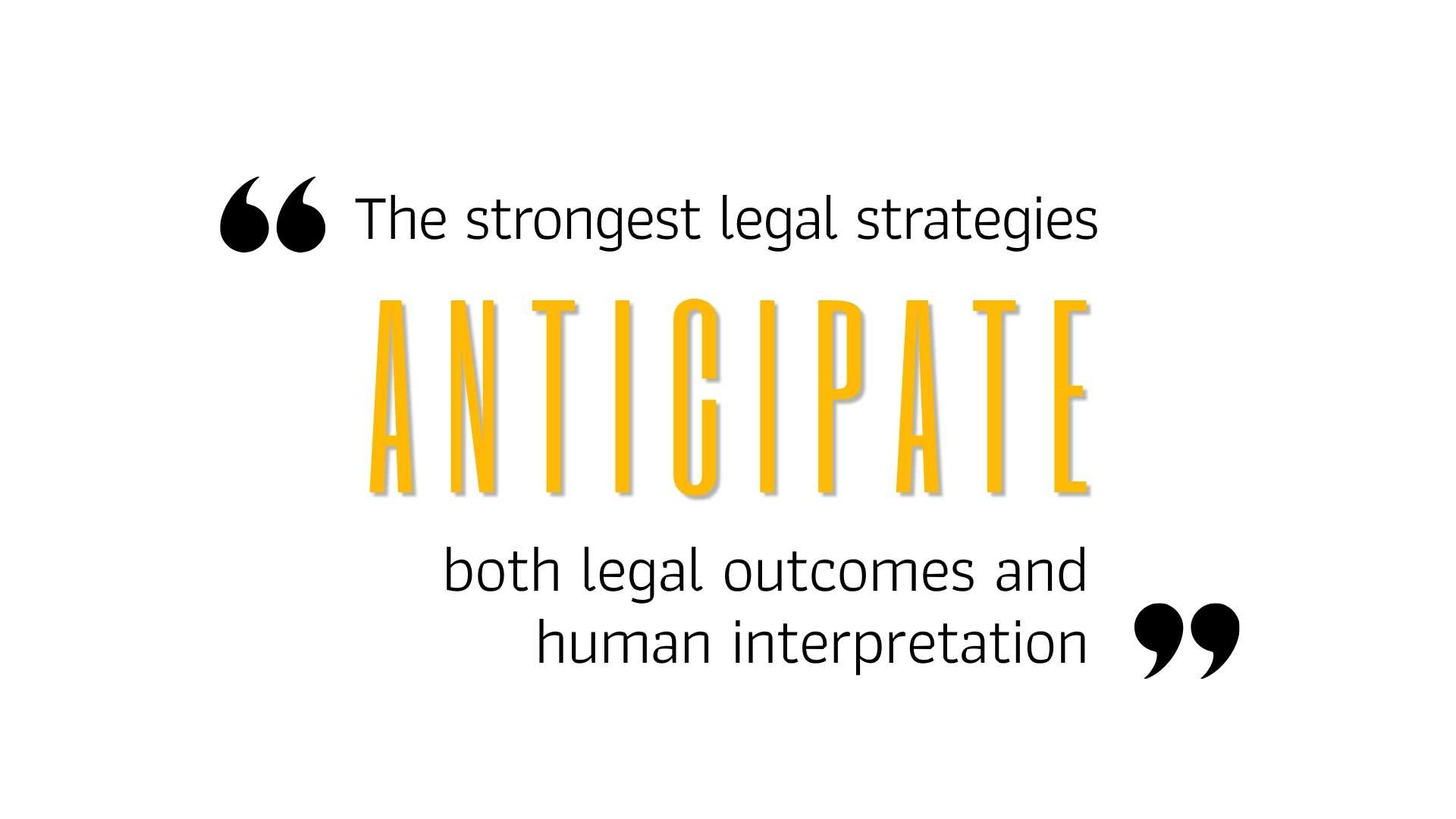
The most effective lawyers anticipate both dimensions. They understand the legal implications of a decision while recognising how that same decision will be interpreted by the people who must respond to it.
This is not an argument for making legal advice more persuasive or more marketable. But it is a reminder that, law has always been one of society’s most powerful systems for creating meaning. Every contract reflects assumptions about trust. Every notice expresses an understanding of responsibility. Every legal opinion frames uncertainty in a way that helps others decide how to act.
Perhaps lawyers have always shaped interpretation. The profession has simply tended to describe that responsibility using different language.
As legal information becomes easier to access and legal decisions become visible to wider audiences, this dimension of practice is becoming difficult to ignore.
The future of legal practice may, therefore, depend on something more than technical accuracy alone. It may depend on recognising that every legal strategy creates two cases.
One before the law.
Another in the minds of stakeholders.
______________________
Continue the conversation
Join our WhatsApp Channel for insights on legal practice, professional reputation, strategic communications, leadership, client trust, and the future of the legal profession.
______________________
Also read: Why Do Some Lawyers Become the First Call?
Every Project Delay Has a Much Earlier Beginning
The Strongest Business Case for Energy Efficiency Rarely Appears on the Electricity Bill
India’s EV Future Will Be Built in the Spaces Between Industries