
– By Mayuri Singh and Nishant Saxena
What does a packet of sattu and makhana from Bihar, Koraput coffee from Odisha, and handicrafts from Gujarat have to do with a geopolitical summit?
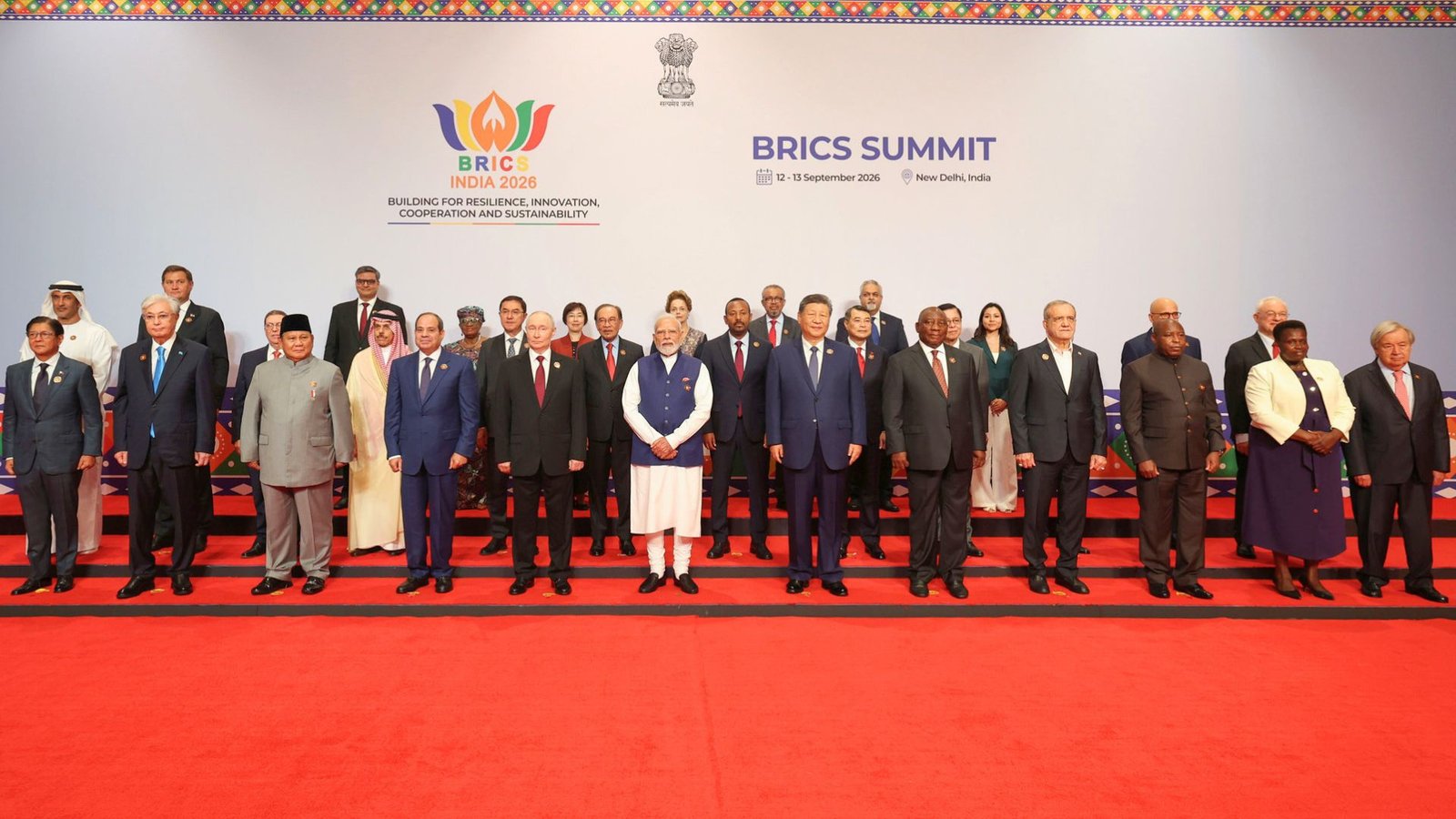
For the international journalists covering the 18th BRICS Summit in New Delhi, they offered a glimpse of an India that could sit alongside the geopolitics.
India’s media kit for the summit brought together products from different parts of the country, with the stated aim of showcasing the “India Story” to international media. Cultural initiatives such as Sangam, which brought artists from BRICS countries together, and the spread of BRICS engagements across cities added further dimensions to that story.
India was, in effect, communicating two stories at the same time: the story of BRICS as an emerging force in global governance, and the story of India as a country with its own economic, cultural, and strategic identity.
That is what makes the summit worth examining through a strategic communications lens. The communication did not sit in the leaders’ speeches or the final Declaration alone. It was spread across the people invited, the experiences created for them, the way the grouping was positioned and the initiatives placed behind its larger claims.
Energy provides one of the clearest examples.
Positioning BRICS without closing India’s strategic space
One of the most deliberate elements of the BRICS narrative has been the distinction between “non-Western” and “anti-Western”.
India has used this formulation consistently in describing BRICS. The difference is significant. An anti-Western grouping is defined by opposition; a non-Western grouping makes a claim about representation and voice within the international system.
This creates room for India to argue for a greater role for the Global South while maintaining relationships with the United States, Europe and other countries outside BRICS. It also gives members with very different geopolitical relationships with the West a formulation around which they can cooperate.
The positioning therefore does more than manage perceptions of BRICS. It defines the space in which the grouping wants to operate, while leaving India room to pursue its own strategic relationships.
Giving international audiences an India they can carry forward
The media kit is revealing for another reason.
A journalist arriving in New Delhi to cover geopolitics, trade, conflicts and global governance was also given regional food products, coffee and handicrafts. The selection drew from Bihar, Odisha and Gujarat, bringing parts of India’s regional identity into an international media environment that could otherwise have remained centred on the capital’s diplomatic establishment.
Sangam offered another expression of the same idea through culture, bringing artists from BRICS countries together around the theme of convergence.
These details are easy to treat as ceremonial. But they also make an abstract proposition easier to communicate. India’s diversity becomes something a journalist can see and photograph; BRICS cooperation acquires a cultural expression that does not depend on a policy document.
There is a practical lesson here for anyone communicating with an unfamiliar audience: the strongest stories travel further when audiences are given something concrete through which to encounter them.
Holding a diverse coalition together
The expansion of BRICS has made the grouping more heterogeneous. Its members occupy very different positions in global trade, geopolitics and energy. Some are major hydrocarbon producers; others are large energy consumers or are expanding renewable, nuclear, hydrogen, and other low-carbon capacities.
The New Delhi Declaration accommodates these differences through references to national circumstances, development priorities, technological choices, and different energy pathways.
That approach is particularly visible in energy, where a common position has to accommodate countries facing very different realities.
Reframing the energy transition around the energy system
The Declaration places energy security alongside economic and social development, national security, and welfare. It recognises the continuing role of fossil fuels, particularly for emerging and developing economies, while supporting renewables, nuclear power, hydrogen, storage and other technologies. It also emphasises technological neutrality and national circumstances.
The result is a broader conception of the energy transition. Security, affordability, access, infrastructure, technology and emissions reduction sit within the same frame.
For countries with rising electricity demand and substantial development needs, the transition cannot be separated from the reliability and cost of the energy system being built. The choice of technology is therefore connected to infrastructure, investment, resource availability, and the ability to maintain affordable energy access.
BRICS is making room for those realities within the transition conversation.
Building the energy story before the summit
The energy narrative also had a foundation beyond the leaders’ Declaration.
During India’s BRICS chairship, the Energy Track brought energy security and sustainability, energy access and equity, and technology and innovation into the same agenda. The June 2026 BRICS Energy Ministers’ Meeting addressed smart grids, energy storage, hydrogen, critical minerals, digitalisation, and artificial intelligence, among other areas.
India also launched the BRICS Digital Centre of Excellence for Smart Grids and Energy Storage.
The New Delhi Declaration subsequently welcomed cooperation on smart grids and storage and advanced work involving hydrogen, critical minerals, and digital technologies.
The summit therefore had an existing body of work to point to. The political message was supported by initiatives already being developed through the chairship, giving the energy narrative something more substantial than a declaration alone.
Moving from energy transition to economic sovereignty
Critical minerals extend the conversation further. The Declaration calls for resilient and diversified critical-mineral supply chains and greater cooperation, including around value addition. This brings resource ownership, processing, manufacturing, and the distribution of economic value into the energy-transition debate.
For resource-rich developing countries, the question is increasingly how much value they can capture from the materials required for the new energy economy. For importing countries, reliable and diversified access becomes part of energy and industrial security.
Critical minerals therefore connect the energy transition with supply-chain resilience, industrial policy, and economic sovereignty.
Beyond the summit message
What stands out from India’s BRICS chairship is the consistency across its different points of contact.
The positioning of BRICS as non-Western rather than anti-Western created geopolitical space. The media kit and cultural initiatives gave international audiences tangible ways into the India Story. The Declaration allowed countries with different interests to remain within a common position. The Energy Track provided initiatives around grids, storage, hydrogen, digitalisation and critical minerals that gave the energy narrative substance.
This is strategic communication at a scale larger than a speech or a press release. It requires the same strategic idea to hold across policy, stakeholder experience, institutional initiatives, and the stories that eventually reach wider audiences.
Energy is an especially revealing test because security, affordability, development, technology and decarbonisation do not always point in the same direction.
BRICS does not have one energy policy, and its members have little reason to pursue identical pathways. What the New Delhi Declaration provides is a common frame around energy security, development, technological choice, resilience, and transition within which those differences can remain.
In a fragmented world, the ability to create common ground without demanding uniformity may be one of the most consequential forms of strategic communication.
As energy systems become more diverse, how should global institutions communicate a transition that accommodates different national priorities and realities?
_________________________
Want more insights like this?
Click here to join our WhatsApp Channel for strategic communications insights, leadership perspectives, industry observations, in-depth analysis, and practical communications tips.
________________________
Also read: Does Legal Expertise Need Simplification or Translation?
When Incentives Speak Louder Than Leadership