
– By Mayuri Singh and Nishant Saxena
Three recent policy announcements have emerged from very different parts of India’s energy sector.
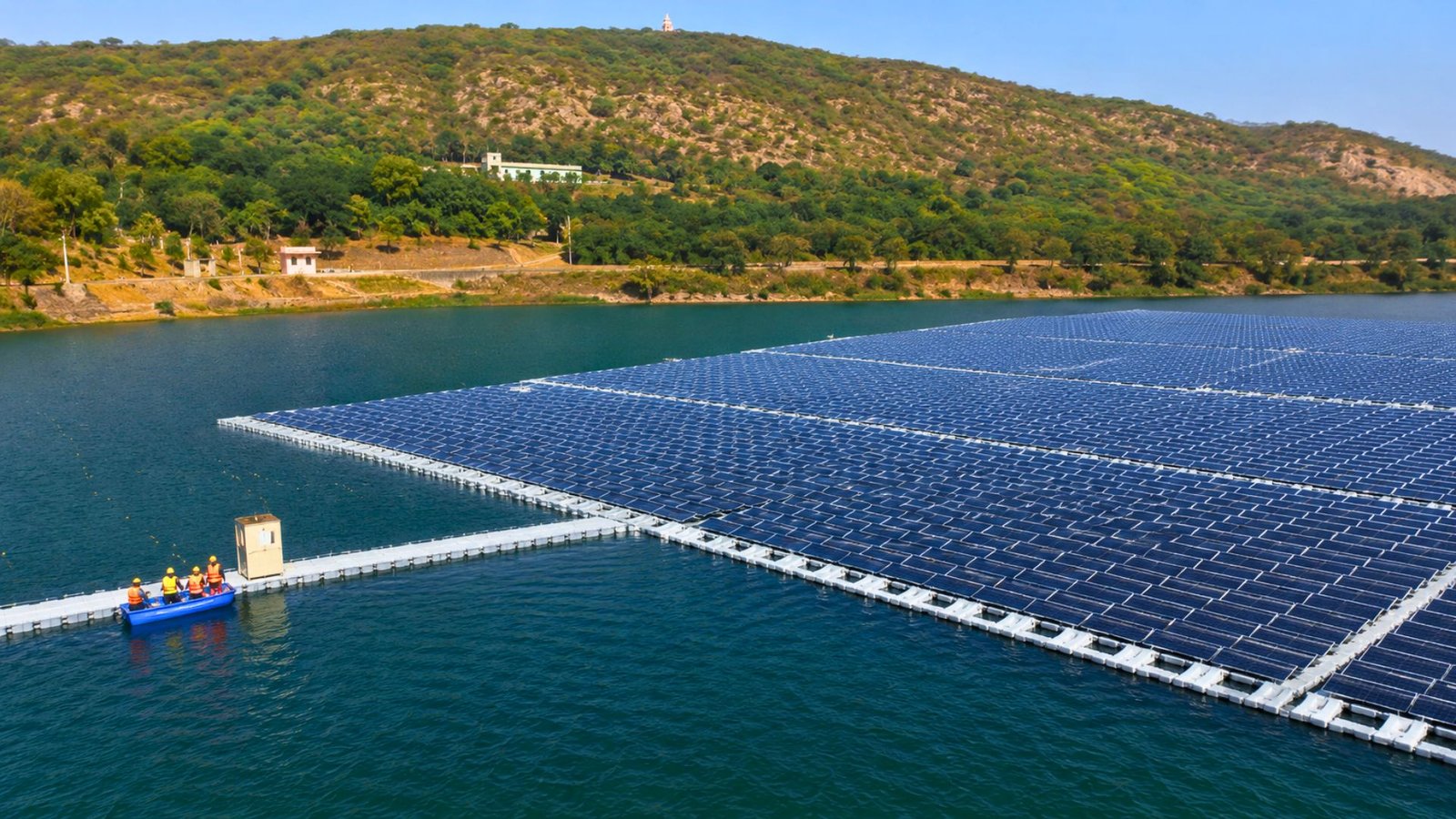
The Pradhan Mantri Surya Sarovar Yojana (PM-SSY) will develop floating solar projects integrated with battery energy storage on reservoirs. Samudra Manthan, the National Offshore Exploration Scheme, is designed to strengthen domestic offshore exploration and support India’s long-term energy security. Offshore wind, meanwhile, is being advanced through viability gap funding and investments in enabling port infrastructure to help establish a commercially viable offshore renewable energy market.
These are fundamentally different initiatives pursuing distinct policy objectives. But together, they reveal a challenge that extends well beyond engineering, regulation or finance.
PM-SSY is a renewable energy programme. Offshore wind seeks to build an entirely new clean-energy market. Samudra Manthan follows a different policy logic centred on domestic hydrocarbon exploration.
What they do share is the environment in which they will operate.
Reservoirs are simultaneously sources of irrigation, drinking water and fisheries. Coastal waters support biodiversity, shipping, tourism and fishing livelihoods. Offshore exploration takes place within marine environments, where environmental safeguards and public scrutiny are unavoidable.
Building infrastructure in such settings involves more than technical execution. It also requires demonstrating how energy development can coexist responsibly with the ecological systems and communities already connected to these places.
Not Every Project Can Be Communicated the Same Way
Infrastructure projects are often supported by a standard communication approach. These three initiatives illustrate why that assumption deserves reconsideration.
For PM-SSY, questions are likely to centre on reservoir use, water management, fisheries, ecological monitoring and long-term maintenance. Local communities will want to understand why a particular water body has been selected and what changes, if any, they should expect. Reservoir authorities will seek clarity on operational protocols and environmental safeguards.
Offshore wind presents a different communication environment.
As projects move from policy announcements to implementation, discussions naturally expand to marine spatial planning, fishing access, transmission corridors, ecological monitoring and supporting infrastructure. Information prepared for investors is unlikely to answer the practical concerns of coastal communities, local administrations or marine stakeholders.
Samudra Manthan introduces another set of conversations.
Because it concerns offshore exploration, discussions inevitably include drilling practices, spill preparedness, environmental safeguards, scientific assessment and the role of domestic hydrocarbons within India’s evolving energy mix. These are different from the questions surrounding renewable energy projects, but they require the same degree of technical credibility and transparency.
The communication challenge changes because the project changes.
Where Project Planning Often Falls Short
Engineering studies, environmental assessments and financial modelling usually begin at the earliest stages of infrastructure development. Communication planning rarely receives the same discipline.
In many projects, it begins only after major technical decisions have been taken or statutory approvals secured. By then, different stakeholders may already have formed views based on fragmented information, media reports or assumptions that were never addressed.
Technical documentation alone cannot bridge that gap. Environmental assessments are prepared for regulators. Engineering reports support technical evaluation. Financial models guide investment decisions.
None of these documents is intended to answer the questions that reservoir authorities, fishing communities, district administrations, environmentalists, journalists or non-specialist policymakers are likely to ask.
Those questions emerge regardless.
The issue is not whether institutions will eventually respond. It is whether they are prepared before those conversations begin.
Communication as Part of Project Design
For projects occupying environmentally sensitive settings, strategic communication should be planned alongside engineering, environmental assessment and stakeholder mapping.
Its role extends well beyond visibility or reputation.
Communication planning starts by identifying who is likely to be affected, what information different audiences will reasonably expect, and how technical evidence can be explained without sacrificing scientific accuracy.
That process looks different for every project.
A reservoir authority may need evidence that floating solar will not interfere with water management objectives. Fishing communities are more concerned about continued access and livelihood implications. Environmental regulators focus on monitoring protocols and compliance commitments. Investors increasingly examine whether unresolved environmental issues could affect execution timelines or long-term project viability.
Each audience is evaluating the same project. None is asking the same question.
That is why communication strategies cannot rely on a single narrative or a standard stakeholder presentation.
In practice, this means communication planning should begin alongside environmental assessment.
→ Stakeholder mapping should identify the questions different audiences are likely to ask before project announcements are made.
→ Scientific findings should be translated into language that remains technically accurate while becoming understandable outside specialist circles.
→ Public reporting should evolve as projects move from planning to construction and operations, because environmental stewardship is assessed throughout the life of an asset rather than only at the point of approval.
Why the Distinction Matters
Strategic climate communication extends well beyond community engagement.
Long-life infrastructure assets are increasingly evaluated through the quality of governance surrounding them. Investors look for evidence that environmental and stakeholder risks have been anticipated before they affect execution. Regulators expect environmental commitments to remain visible throughout the operating life of a project. Public authorities often carry the responsibility of explaining how competing public interests have been balanced while pursuing energy objectives.
Projects that communicate environmental decisions consistently are generally better positioned to demonstrate institutional preparedness than those that begin communicating only after questions start to emerge.
Strategic communication, therefore, contributes to implementation in much the same way as environmental monitoring or regulatory compliance. It does not replace either discipline. It enables their purpose, evidence, and outcomes to be understood beyond specialist circles.
Lessons Beyond These Three Initiatives
The questions raised by PM-SSY, offshore wind, and Samudra Manthan are unlikely to remain confined to these programmes.
Pumped storage projects, transmission corridors through environmentally sensitive regions, hydrogen hubs, carbon management facilities and future offshore developments will all operate in places where ecological value, local livelihoods, and public interest intersect.
Each technology will present different technical and regulatory challenges.
Each will also require a communication strategy designed around its own environmental context, rather than a standard corporate outreach programme.
That calls for a broader understanding of project preparedness.
Engineering, finance, environmental science and regulation have long been recognised as core disciplines in infrastructure development. Projects located in environmentally sensitive settings increasingly require communication planning to be treated with the same seriousness.
Parting Thoughts
PM-SSY, offshore wind, and Samudra Manthan differ in purpose, technology and policy design. What connects them is the environment in which they must be implemented.
Building infrastructure within reservoirs, coastal waters and marine ecosystems inevitably invites questions that engineering drawings, environmental studies and regulatory filings cannot answer on their own.
Those questions are not signs that projects have failed. They are a natural consequence of developing infrastructure in places that communities already value for many reasons.
Institutions that prepare for those conversations from the outset are likely to encounter fewer surprises than those that begin communicating only after approvals have been secured.
Climate-sensitive projects, therefore, require climate-sensitive communication.
Communication is not a substitute for engineering, environmental science or regulation, but it will help those disciplines remain visible, understandable and accountable throughout the life of the project. As India’s energy infrastructure expands into increasingly complex ecological settings, that capability will become an integral part of successful project implementation.
_________________________
Want more insights like this?
Click here to join our WhatsApp Channel for strategic communications insights, leadership perspectives, industry observations, in-depth analysis, and practical communications tips.
________________________
Also read: India Is Preparing for Retail Electricity Competition. Is the Ecosystem Ready?
Every Merger Creates Two Organisations
India’s Green Hydrogen Mission Is Building Its Commercial Architecture
When Does a Law Firm’s Reputation Become Bigger Than Its Founders?